Chair Yoga vs. Mat Yoga: Why Accessible Somatic Practice is the Future of Mental Health
When you hear the word "yoga," your mind likely jumps to a specific commercial image. You picture colorful mats, complex athletic twists, and studios that require you to change into specialized gear. For a busy corporate executive, lawyer, or physician, this version of wellness can feel like another exhausting task on an already overloaded to-do list.
As a high-achieving woman of color, your time is a premium commodity. You do not always have 90 minutes to leave your clinic or office, travel to a studio, and sweat through an intense fitness class. More importantly, when your nervous system is completely fried from institutional stress, hyper-athletic movement can sometimes spike your cortisol even higher.
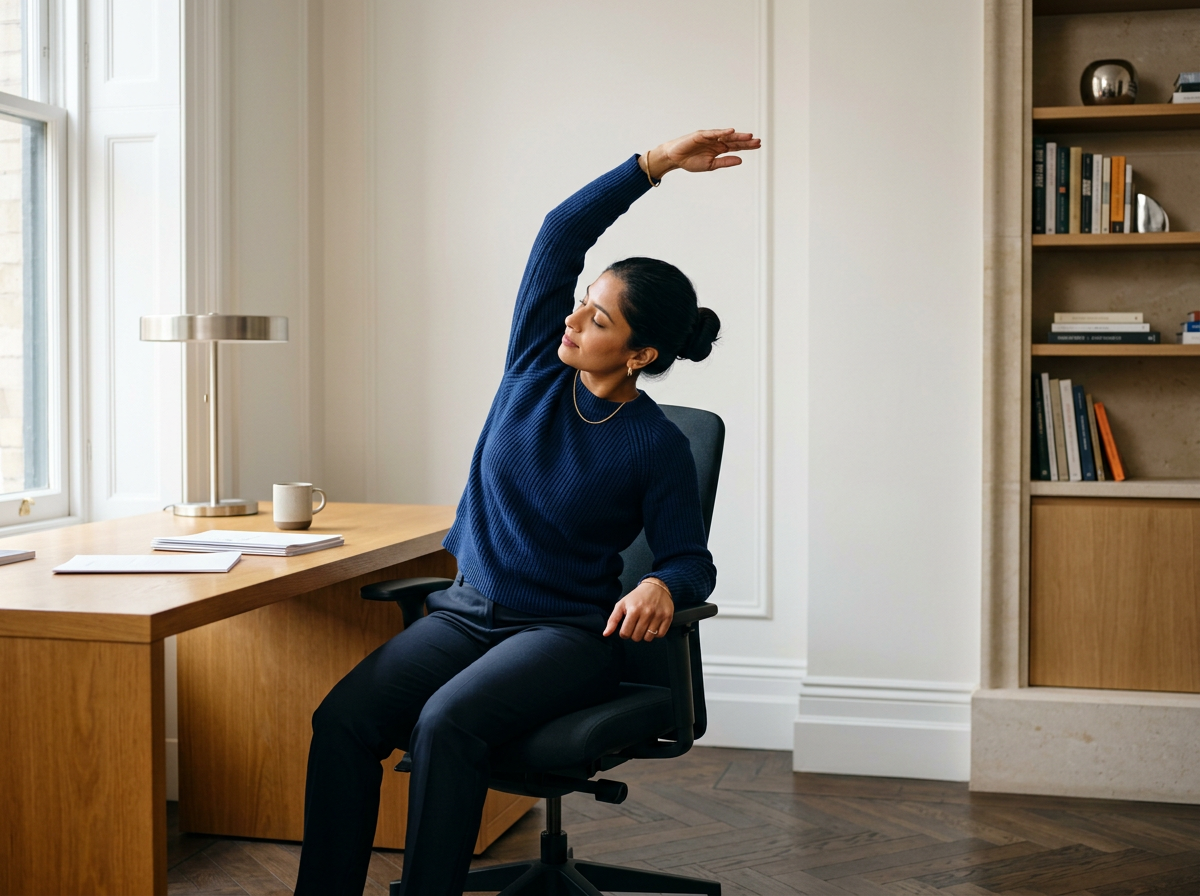
True mental health regulation does not require getting down on a floor mat. Somatic chair yoga therapy strips away the fitness stereotypes, delivering immediate brain-body trauma release right from the seat of your professional power.
The Neurological Power of Seated Somatic Reset
Traditional mat yoga is highly beneficial, but it introduces specific barriers for a stressed professional. It requires a change of scenery, physical agility, and an open block of time. Chair-based somatic practice, however, meets your nervous system exactly where it is: trapped at a desk.
Shifting your therapeutic movement to a chair alters your brain chemistry through three distinct clinical mechanisms:
Immediate Environmental Habituation: By practicing in your actual workspace, you train your brain to associate your desk with safety and down-regulation, rather than chronic hyper-vigilance.
Targeted Axial Decompression: Chair-based poses isolate the pelvis, spine, and neck—the exact structural zones where desk-bound professionals store systemic tension and trauma.
Lower Metabolic Friction: Because the movements are accessible and don’t require athletic strain, your system can easily transition out of fight-or-flight without triggering a physical stress response.
By utilizing the chair as a clinical tool, we practice bottom-up regulation. We use the body to tell the brain it is safe to relax, instantly disrupting the cycle of corporate anxiety and low mood during the actual workday.
Dr. Nicole’s Daily Reset Tools
You can experience the regulatory shift of somatic chair therapy in less than two minutes. Try these tools in your seat right now:
The Somatic Tool (The Body)
Sit near the edge of your chair with both feet flat on the floor. Place your hands firmly on your knees. As you inhale through your nose, gently arch your spine, lift your chest, and look toward the ceiling (Seated Cow). As you exhale slowly through your mouth, round your spine, drop your chin to your chest, and pull your navel inward (Seated Cat). Repeat this fluid sequence three times. This rhythmic movement decompresses the spine and stimulates the vagus nerve to lower heart rate variability.
The Cognitive Tool (The Mind)
Catch the perfectionistic corporate thought: "A real workout or reset has to be difficult and take an hour to count."Intentionally replace it with this clinical truth: "Accessibility is the key to consistency. A two-minute seated reset is a powerful, valid reclamation of my mental harmony."
Claim Your Virtual Seat
Nervous system regulation belongs in your everyday life, not just on a weekend retreat. If you are ready for an accessible, expert-led space to unwind corporate stress during your lunch break, I invite you to join our global community.
Reserve Your Virtual Seat for Monday’s $10 Somatic Chair Yoga Class